
English Version
Managers often ask: How can I increase employee loyalty without raising salaries?
This question seems like economics on the surface, but at its core, it's psychology—and at an even deeper level, it's about power structure design. The most masterful architects of power structures have never been management theorists, but rather the builders of armies, religions, and extremist organizations.
They understand a truth from probability theory: Money is just one variable in the incentive function, and far from the one with the highest weight.
Why is this a "probability weight" problem? Because loyalty is never a binary state of 0 or 1—it's a probability distribution. At any given moment, employees are weighing the expected returns of "staying" versus "leaving."
A manager's task isn't to pursue 100% loyalty (which doesn't exist), but to systematically increase the probability weight of staying. When you manipulate the variables beyond money, money's weight in that probability function naturally becomes diluted.
So this isn't a moral question—it's a mathematical one.
Why Not Money
A. The Paradox of Money
The Diminishing Utility Curve
Monetary incentives exhibit a classic economic paradox: with each additional dollar, the rate of utility growth slows down. Managers always realize too late—when you raise someone's salary from 10k to 15k, they're ecstatic; from 20k to 25k, barely a shrug. This isn't because employees are ungrateful—it's because the relativity of money always trumps its absolute value.
Nobel laureate Daniel Kahneman's Prospect Theory describes this phenomenon precisely: people's sensitivity to gains diminishes as amounts increase, while sensitivity to losses remains constant. This means the marginal effect of raises grows weaker, while the damage from pay cuts remains severe.
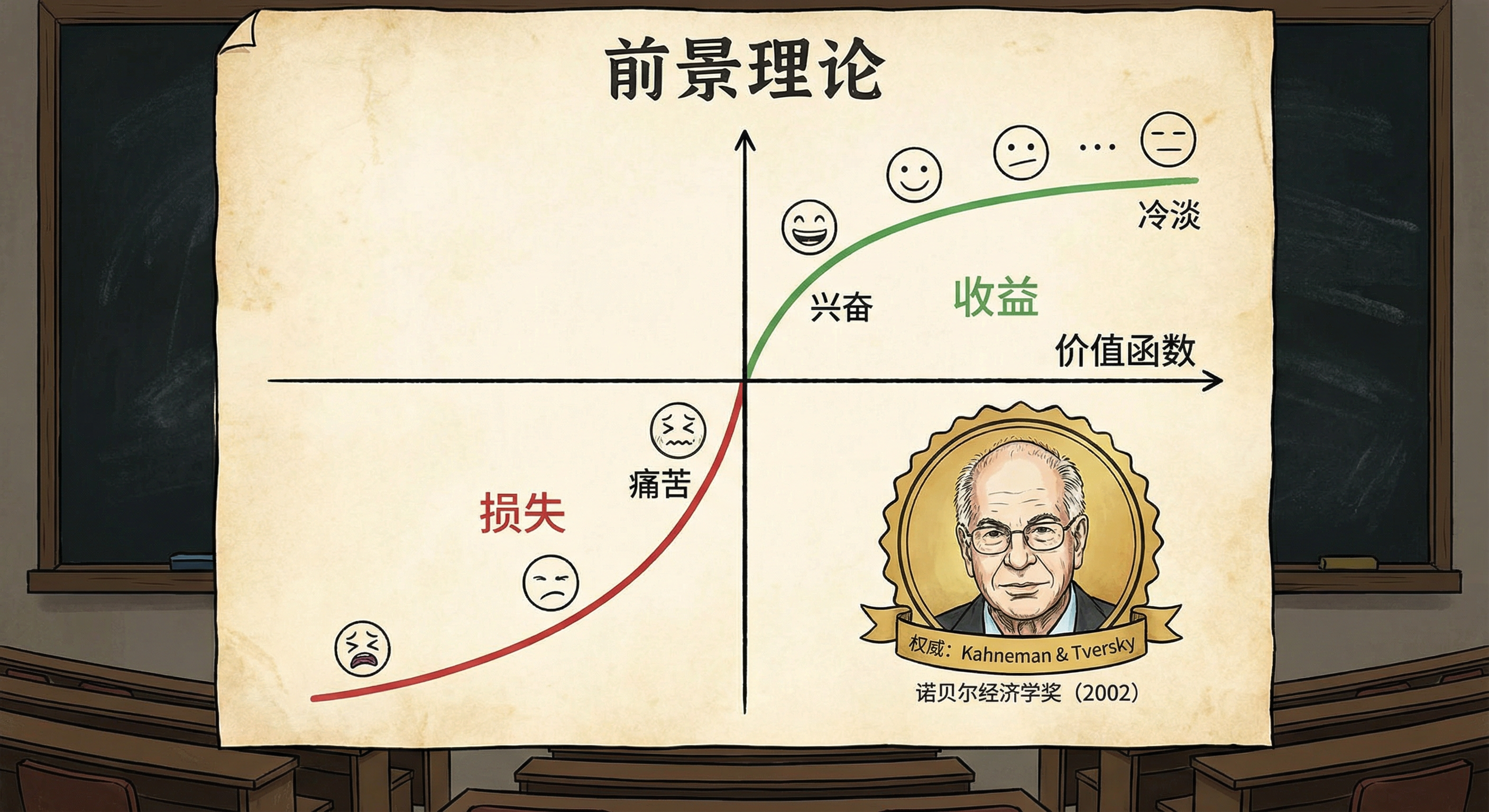
Kahneman's Prospect Theory: Visualizing diminishing returns and constant loss aversion.
Moreover, sometimes not increasing compensation can actually spark greater loyalty—this sounds absurd, but it's an experience repeatedly validated by military units and ascetic religious orders. Cognitive dissonance theory explains this: when people sacrifice for a low-reward cause, they tend to inflate their valuation of that cause to rationalize their choice.
The Fragility of Transactional Relationships
When loyalty is priced, it becomes a transaction. And transactions have a fatal weakness: there's always someone willing to pay more. Your employees aren't slaves—they have a market. Your competitors know this too. So monetary loyalty is essentially liquid loyalty—its half-life is as short as Iodine-131, decaying by half in less than two weeks.
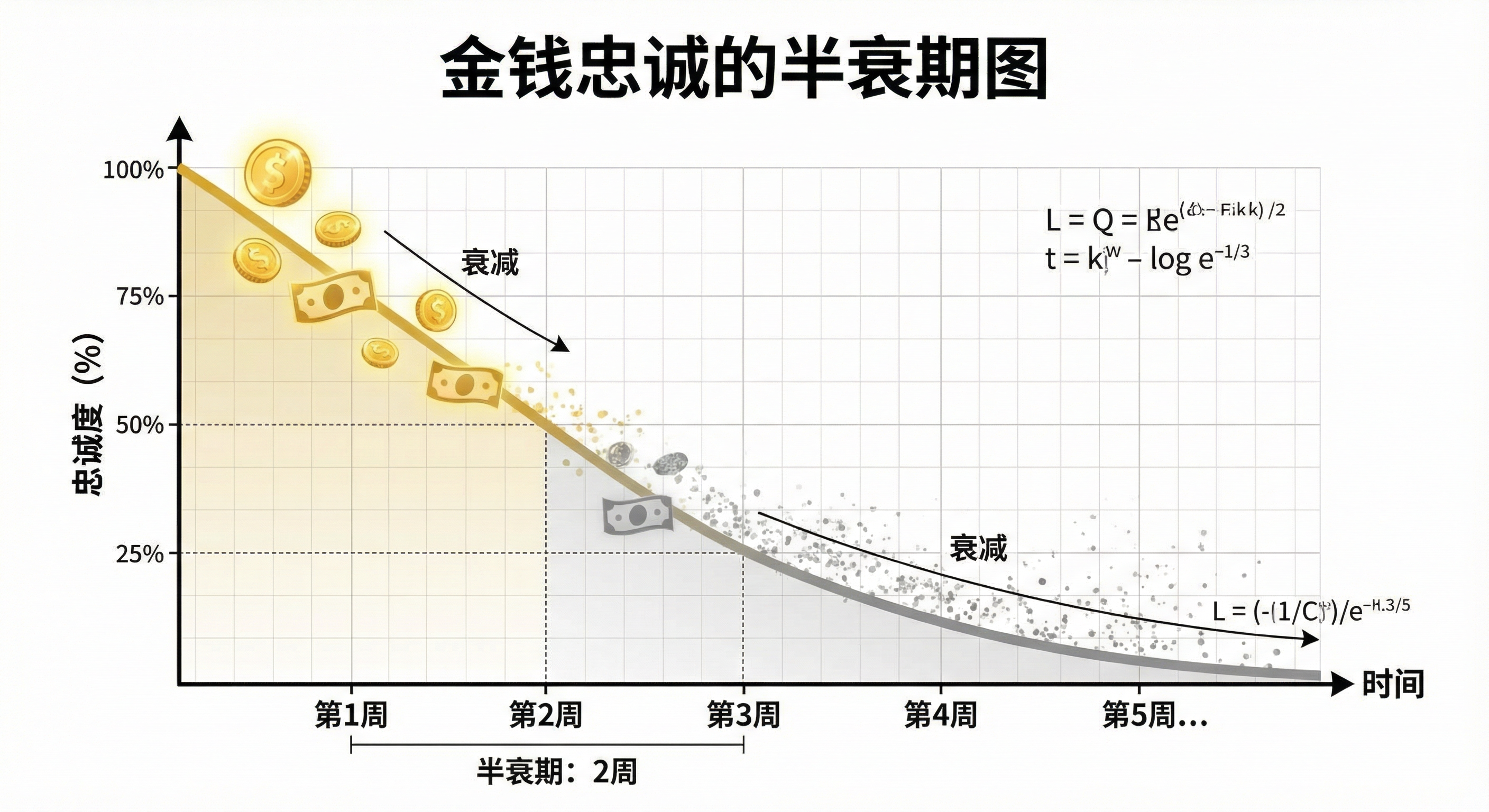
The half-life of monetary loyalty.
True loyalty should have sunk cost characteristics—the cost of leaving the company far exceeds the benefits of staying. But that cost doesn't come from salary differentials—it comes from irreplicable collective capital.
The Physics of Non-Monetary Incentives
Imagine a physical system. Money is an external force—it can temporarily alter the system's trajectory, but once removed, the system immediately rebounds. Non-monetary incentives are internal forces—they change the structure of the system itself, giving it a new center of gravity.
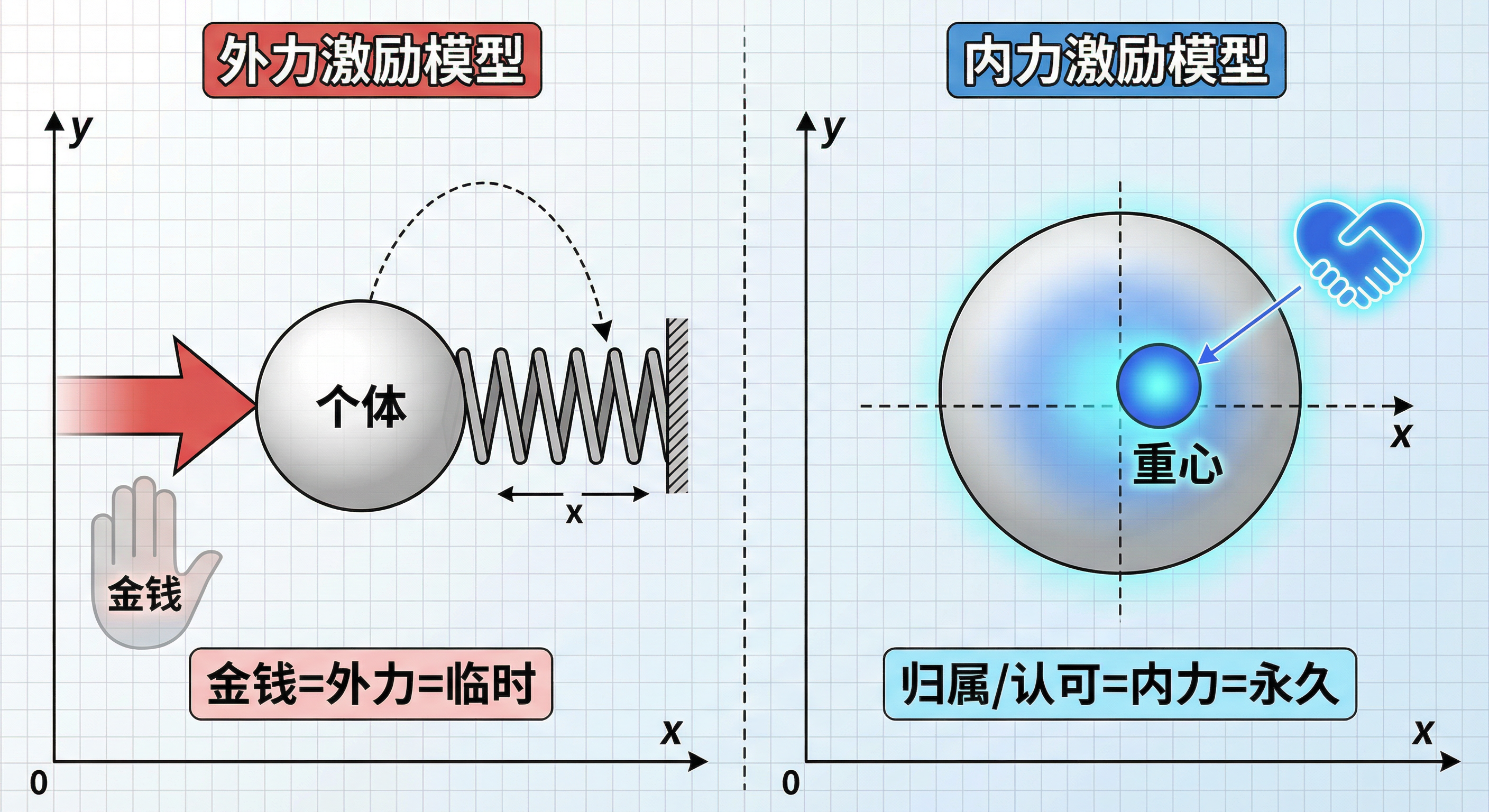
External vs. Internal Forces: A physics model of incentives (system structure comparison).
Multiple studies support this observation:
- Gallup's global workplace survey found that "being recognized" is one of the strongest predictors of employee engagement, surpassing salary satisfaction
- LinkedIn's talent trends report shows that career development opportunities are the primary consideration for employees choosing new jobs, with compensation ranking third
- MIT Sloan's research indicates that "toxic corporate culture" is 10 times more likely to cause turnover than salary dissatisfaction These numbers point to a hidden mechanism: What people need isn't money, but what money represents—the feeling of being seen, recognized, and needed. Money is just a cheap proxy for this feeling. When you find the real proxy, money becomes redundant.
The Four Pillars of Loyalty
Before exploring each pillar, it's worth explaining their relationship: these four pillars aren't a parallel checklist—they form a progressively layered structure.
Shared identity is the foundation; leader sacrifice is the proof that makes the foundation credible; psychological need fulfillment builds the rooms on that foundation; and structural dependency is the ultimate mechanism that makes people reluctant to leave the house. Without the preceding layers, the later ones cannot stand firm.
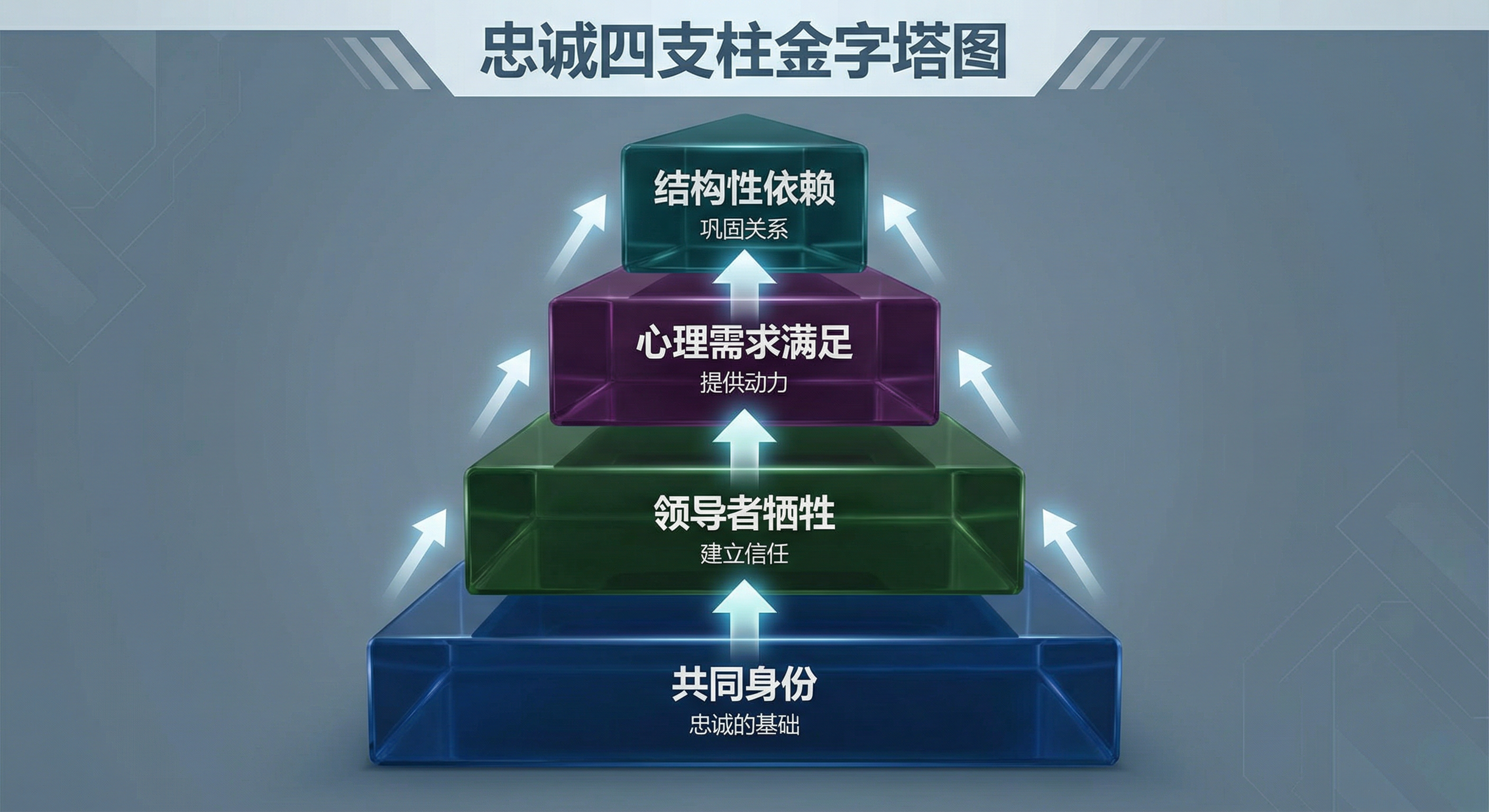
The Four Pillars of Loyalty: A progressively layered pyramid structure (relationship diagram).
Pillar One: Building Shared Identity (Identity Ownership)
Armies don't earn soldiers' loyalty through monthly wages—they reshape soldiers' self-definition through rituals, language, visual symbols, and common enemies. When someone begins to see themselves as "a member of the 47th Legion" rather than "an individual," their entire psychological framework shifts.
One of history's most successful examples is Alexander the Great's Macedonian army.

Alexander the Great: A historical paradigm of identity construction (Macedonian phalanx and honor system).
Alexander didn't just pay his soldiers—he gave each phalanx its own name and honor history, made veterans mentors to new recruits, and turned "Macedonian" into a source of pride transcending personal interest. The result: this army maintained astonishing cohesion even after Alexander's death.
The translation to business is straightforward: let employees participate in defining "who we are" rather than passively receiving it.
- Instead of the CEO announcing "our mission is X," have teams collaboratively explore "why do we exist"
- Create team-specific language (certain phrases, jargon, inside jokes)—this is the most effective psychological anchor for belonging
- Repeatedly reinforce the "us vs. outside" boundary: competitors, industry pressures, market changes. A common enemy unites people more effectively than any reward Social Identity Theory tells us that when group identification strengthens, individuals automatically reduce the weight they place on personal material gains. This isn't brainwashing—it's humanity's innate identity-belonging mechanism.
Pillar Two: Leader Sacrifice Signaling (Sacrifice Signaling)
This is a mechanism systematically overlooked by management textbooks.
Soldiers will die for a commander who starves and risks death alongside them. But for a general who issues orders from a tent in the rear? The same death order will be executed with far less commitment.
Why? Because sacrifice is the highest form of credibility.
History repeatedly confirms this. At the Battle of Arcole, Napoleon personally carried the flag into the charge and nearly died—this moment was remembered by his soldiers for life and became a cornerstone of the Grande Armée's mythology. At the other extreme, WWI generals who never set foot on the front lines, even when tactically correct, never earned their soldiers' true respect.

The credibility of sacrifice: Arcole Bridge vs. rear headquarters (leadership style comparison).
In the corporate context, this means:
- In crisis moments, leaders should bear more risk and loss than their subordinates (like some executives during the 2008 financial crisis who voluntarily gave up bonuses or even took pay cuts, rather than laying off employees first)
- Publicly relinquish certain management privileges (not just symbolically) to demonstrate solidarity with the team
- Show personalized memory and attention to team members (remembering their names, families, dreams) Subordinates will forgive many of a leader's shortcomings, but there's one bottom line—they must believe the leader is authentic. And the most powerful proof of authenticity is seeing your choices when no one is watching.
This is why a battalion commander who sleeps next to the soldiers earns lifetime loyalty, while a CEO on remote video calls struggles to earn the same trust even with the highest salary.
Pillar Three: Meeting Deep Psychological Needs (Psychological Scaffolding)
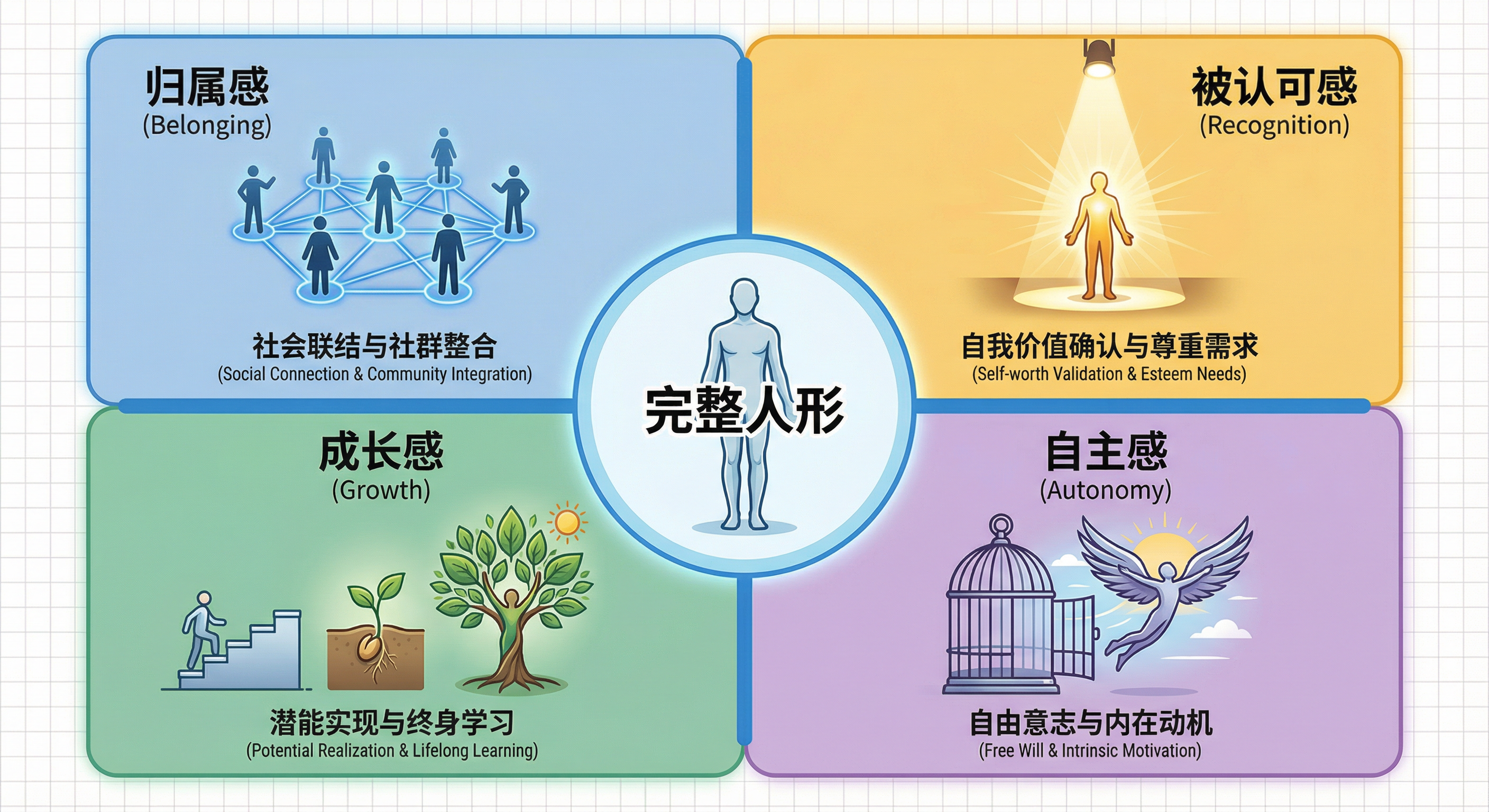
The four dimensions of deep psychological needs (belonging, recognition, growth, autonomy).
Money is surface-level motivation. Deep motivations come in four forms:
- Belonging This is the most underestimated motivator. Gallup's research found that "having a best friend at work" strongly correlates with employee retention, work quality, and customer satisfaction.
The reason is simple: humans are tribal animals, not economic animals. A high-paying position where you don't fit in is far more uncomfortable than a medium-paying position where you're deeply integrated.
So managers can design daily rituals that strengthen the sense of "us." This isn't as juvenile as installing a ping-pong table—it's about:
- Regular sharing of small decision-making power (letting employees participate in choices that affect outcomes)
- Informal communication mechanisms (not formal meetings, but open dialogue spaces)
- Collective celebration of small victories (deliberately reinforcing even minor progress)
- Recognition This is more mysterious and more powerful than money. A "you did great work, specifically because of X" recognition generates longer-lasting motivation than a randomly distributed bonus.
Because money is anonymous; recognition is personal. Money disappears once spent; recognition repeatedly activates neural networks. Neuroscience research shows that social recognition activates brain reward circuits that highly overlap with monetary rewards—but recognition's effects are more lasting because they bind to self-concept.
- Growth If an employee believes that staying at this company will make them stronger, they'll tolerate more short-term discomfort. Because they're discounting short-term pain against long-term gains.
Whether this discounting works depends on whether you're actually investing in them, not just using them.
- Autonomy Control is a manager's occupational disease. But psychologists Edward Deci and Richard Ryan's Self-Determination Theory has proven: autonomy is one of three basic human psychological needs. Giving employees more decision-making space actually improves execution quality and commitment. Because choice reinforces ownership.
When employees feel "this is my decision" rather than "I was ordered to do this," the same work carries different meaning weight.
Pillar Four: Structural Dependency
This is the ultimate secret of power, and also the most easily abused.
The most stable foundation for loyalty isn't emotion or rules—it's economic dependency. When someone needs you more than you need them, the power relationship becomes truly stable.
But in business, this dependency must be symmetrical—employees depend on resources, learning, networks, and opportunities the company provides, while the company implicitly depends on their expertise and relationships.
How to do it:
- Let employees master capabilities that cannot be easily replaced (through systematic training investment)
- Create interdependency structures among employees (rather than competitive structures), making each person a critical link
- Build centralization of information and decision nodes, so key decisions must pass through specific people The result: leaving this company means losing something that can't be quickly replicated elsewhere. This is true "sunk cost loyalty."
⚠️ Important Boundary: Structural dependency is a double-edged sword. Its legitimate use is making employees stay because "they can gain unique value here"; its abuse is making employees stay because "leaving would be terrible."

The double-edged sword of structural dependency: Symbiosis vs. Imprisonment.
The former creates symbiotic relationships; the latter creates prison relationships. The test is simple: Are your employees staying because they want to, or because they're afraid to leave? If it's the latter, you've crossed an ethical boundary—and this relationship will eventually collapse in more dramatic fashion.
The Trap and Redemption of Charismatic Leadership
Charismatic leaders can indeed "command loyalty." A CEO with personal charisma can make employees willing to work overtime and accept below-market compensation.
But here's a time bomb: Charisma is personal, not organizational.
When that CEO leaves, or their charisma fades with age, the entire loyalty system collapses. This is why many startups rapidly decline after founders retire—all loyalty was bound to an individual, not to the institution itself.
Apple's chaotic period after Jobs's first departure (1985-1997) is a classic case. Despite still having excellent engineers and products, Apple nearly went bankrupt after losing Jobs as its unifying core. Interestingly, after Jobs returned, he learned his lesson—he spent tremendous energy building Apple's design culture, supply chain system, and talent pipeline, enabling the company to maintain strong momentum even after his death in 2011.
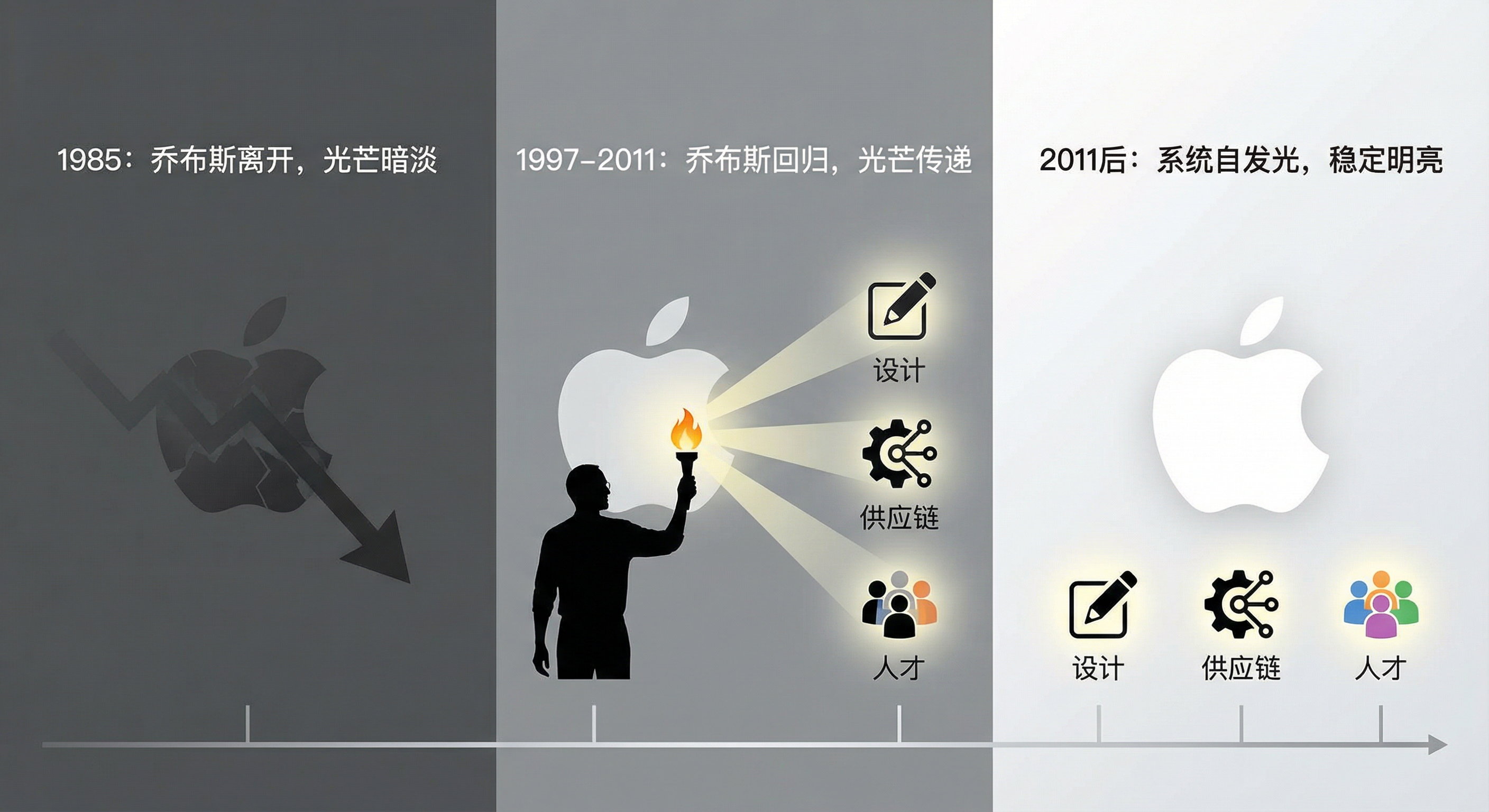
Apple: The evolution from personal charisma to institutionalized capability (Jobs and institutional transfer).
Transform personal charisma into systematic power structure. The approach is counterintuitive—
- A charismatic leader should actively diminish their own centrality
- Achieve power transfer through institutionalization, ritualization, and transparency
- Gradually shift organizational cohesion from "loving this person" to "loving this organization" This is true leadership maturity: Converting irreplicable personal capability into replicable organizational capability.
Conclusion: The Paradox of Honesty
This article might be read as "a guide to manipulating employees," but I'm actually talking about the opposite: how to create an organization worthy of loyalty.
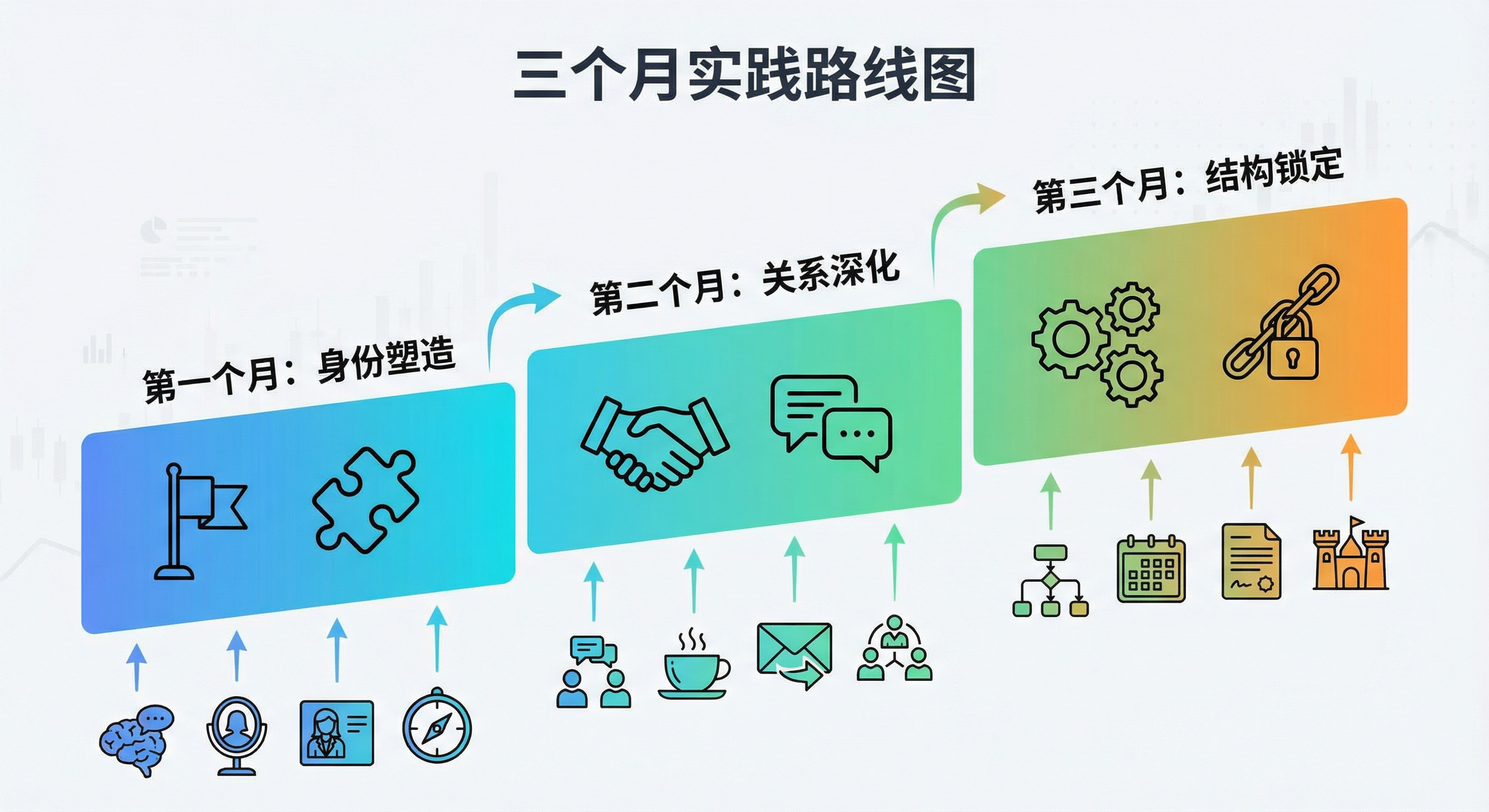
Implementation roadmap: Three-month management pilot strategy timeline.
The military earns soldiers' loyalty not merely through psychological techniques, but because—in certain moments—soldiers genuinely feel the importance of the mission, the authenticity of the team, and the sincerity of their leaders.
None of this can be faked. You can fake many things, but you cannot fake consistency. Employees will observe who you are when no one is watching; they'll notice whether you keep your promises; they'll sense whether you truly see them.
So the premise of this framework is: Your organization must truly be worthy of loyalty.
If this premise doesn't hold, even the most sophisticated psychological techniques are just building a mansion on a rotting foundation. Employees will detect this. They will leave.
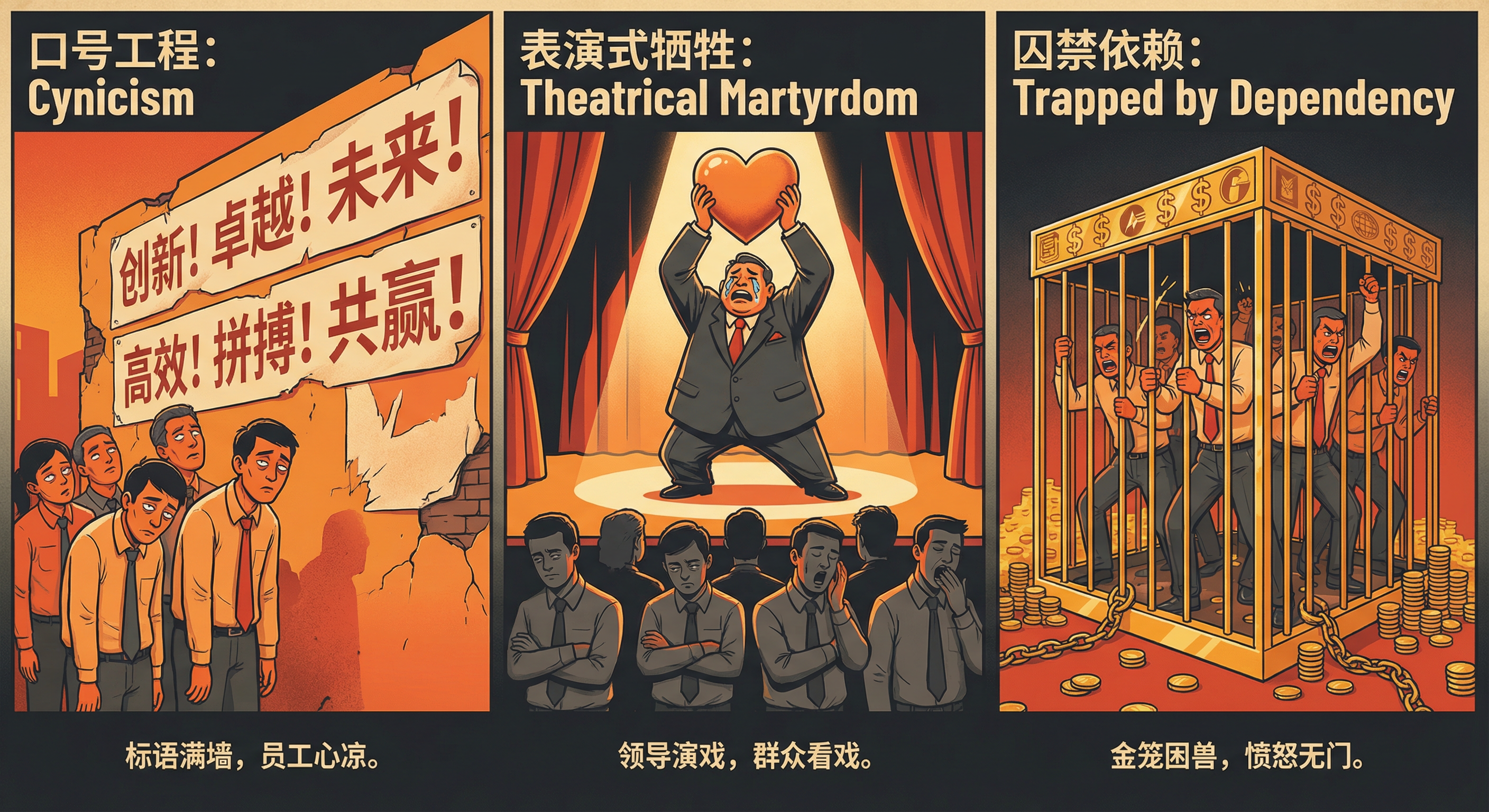
Warning: Three common failure modes (slogan engineering, performative sacrifice, prison-style dependency).
The best leadership isn't about how to acquire loyalty—it's about creating something worthy of loyalty, and then loyalty naturally follows.
Back to the opening question: How do you increase the probability weight of employee loyalty? The answer is—make "staying" possess unique value in employees' expected benefit calculations that money cannot match. Identity, trust, belonging, growth—these are the real probability weight adjusters.
This logic sounds very idealistic. But from a probabilistic perspective, it's also the most realistic choice—because any false structure, given enough time, will be defeated by entropy.
Only authenticity can resist the erosion of time.

Authenticity and time: The only force that can resist entropy.
Chinese Version
管理者常问:如何在不增加薪酬的前提下提高员工忠诚度?
这个问题看似经济学,本质却是心理学——更深层地说,是权力结构设计的问题。而最优秀的权力结构设计者从不是管理学家,而是军队、宗教、极端组织的建筑师。
他们理解一个概率论的真相:金钱只是激励函数中的一个变量,而非权重最高的变量。
为什么说这是"概率权"问题?因为忠诚从来不是 0 或 1 的二元状态,而是一个概率分布——员工在任何时刻都在权衡"留下"与"离开"的期望收益。
管理者的任务不是追求 100% 的忠诚(这不存在),而是系统性地提高留下的概率权重。当你操纵了金钱以外的变量,金钱在这个概率函数中的权重自然会被稀释。
所以这不是道德问题,而是数学问题。
为什么不是金钱
A. 金钱的悖论
递减的效用曲线
金钱激励呈现出经典的经济学悖论:每增加一元,效用增长速度都在减缓。管理者总是后一步发现——当你把薪酬从10k提到15k时,员工欣喜若狂;从20k提到25k时,反应冷淡。这不是因为员工无情,而是因为金钱的相对性永远压倒其绝对值。
诺贝尔经济学奖得主丹尼尔·卡尼曼的前景理论精确描述了这一现象:人对收益的敏感度随数额增加而递减,但对损失的敏感度却保持恒定。这意味着加薪的边际效果会越来越弱,而降薪的伤害却始终剧烈。
卡尼曼前景理论:收益递减与损失恒定的可视化信息图。
而且有时候不增加薪酬反而可能激发更多忠诚——这听起来不可理喻,却是军队和苦行僧组织反复验证的经验。认知失调理论可以解释这一点:当人们为一个低报酬的事业付出时,他们会倾向于提高对这个事业的价值评估,以合理化自己的选择。
交易性关系的脆弱性
当忠诚被标价,它就变成了一笔交易。而交易有个致命弱点:总有人出价更高。你的员工不是奴隶——他们有市场。你的竞争对手也很清楚这一点。所以金钱忠诚本质上是流动性忠诚,它的半衰期短得像碘-131——不到两周就衰减一半。
金钱忠诚的半衰期。
真正的忠诚应该具有沉没成本特性——离开公司的代价远超留下来的收益。但这种代价不是来自薪酬差距,而是来自无法复制的集体资本。
非金钱激励的物理学
想象一个物理系统。金钱是外力,它可以临时改变系统轨迹,但一旦撤离,系统立即反弹。而非金钱激励是内力——它改变系统的结构本身,使其有了新的重心。
外力与内力:激励的物理学模型(系统结构比较)。
多项研究支持这一观察:
- 盖洛普的全球职场调查发现,“被认可”是员工敬业度最强的预测因子之一,其影响力超过薪酬满意度
- 领英的人才趋势报告显示,职业发展机会是员工选择新工作的首要考量,薪酬排在第三位
- 麻省理工斯隆管理学院的研究表明,“有毒的企业文化”导致离职的可能性是薪酬不满的10倍以上 这些数字指向一个隐藏的机制:人需要的不是钱,而是钱背后的那个东西——被看见、被认可、被需要的感受。金钱只是这个感受的廉价代理。当你找到真实的代理,金钱就显得多余了。
忠诚的四个支柱
在展开每个支柱之前,有必要说明它们之间的关系:这四个支柱不是平行的清单,而是层层递进的结构。
共同身份是地基;领导者牺牲是让地基可信的证明;心理需求满足是在地基上建造的房间;结构性依赖则是让人不愿离开这座房子的最终机制。缺少前面的层次,后面的层次就无法稳固。
忠诚四支柱:层层递进的金字塔结构(关系说明图)。
支柱一:构建共同身份(Identity Ownership)
军队不是通过月饷让士兵效忠国家——它通过仪式、语言、视觉符号、共同敌人来重塑士兵的自我定义。当一个人开始把自己看作"第47军团的成员"而非"某个个体"时,整个心理框架就改变了。
历史上最成功的案例之一是亚历山大大帝的马其顿军团。
亚历山大大帝:身份塑造的历史典范(马其顿军团方阵及荣誉体系)。
亚历山大不只是给士兵发军饷——他让每个方阵都有自己的名号和荣誉史,让老兵成为新兵的导师,让"马其顿人"这个身份成为超越个人利益的骄傲来源。结果是,这支军队在亚历山大死后仍然保持着惊人的凝聚力。
迁移到企业的逻辑很直接:让员工参与定义“我们是谁”而非被动接收。
- 不是CEO宣布“我们的使命是X”,而是团队协作探索“我们为什么存在”
- 创造团队特有的语言(某些用词、黑话、内部笑话)——这是归属感的最有效心理锚点
- 反复强化“我们 vs 外部”的边界:竞争对手、行业压力、市场变化。共同的敌人比任何奖励都能凝聚人心 社会认同理论(Social Identity Theory)告诉我们,当群体认同变强,个体会自动降低对个人物质收益的权重。这不是洗脑,而是人类天生的身份归属机制。
支柱二:领导者的自我牺牲信号(Sacrifice Signaling)
这是被管理学教科书系统性忽视的一个机制。
士兵会为一个与自己一起挨饿、一起冒死的指挥官赴死。但对一个躲在营帐里发号施令的将领?同样的死亡命令,执行力会大打折扣。
为什么?因为牺牲是可信度的最高形式。
历史反复印证这一点。拿破仑在阿尔科莱桥战役中亲自扛旗冲锋,险些丧命——这一幕被他的士兵们铭记终生,成为法国大军团神话的基石。而在另一个极端,一战中那些从未踏足前线的将军们,即使战术正确,也从未赢得士兵真正的尊敬。
牺牲的可信度:阿尔科莱桥vs后方指挥部(领导风格对比)。
在公司语境中,这意味着:
- 在危机时刻,领导者应该承担比下属更多的风险和损失(如2008年金融危机时,部分企业高管主动放弃奖金甚至减薪,而非先裁员)
- 公开放弃某些管理特权(而非象征性的),以示与团队共进退
- 对团队成员展现个人化的记忆和关注(记得他们的名字、家庭、梦想) 下属会宽恕领导者的很多缺点,但有一个底线——他们必须相信领导者是真实的。而真实性最有力的证明,就是看你在没有人观看时的选择。
这就是为什么军队中,一个睡在士兵旁边的营长能获得终身忠诚,而一个远程视频会议的CEO即使开出最高薪酬也难以获得同样的信任。
支柱三:满足深层心理需求(Psychological Scaffolding)
深层心理需求的四个维度(归属感、被认可感、成长感、自主感)。
金钱是表面激励。深层激励有四个:
- 归属感(Belonging) 这是最被低估的激励。盖洛普的研究发现,"在工作中有一个最好的朋友"这一项,与员工留任率、工作质量和客户满意度都呈强相关。
原因很简单:人是社群动物,不是经济动物。一个与团队格格不入的高薪职位,远比一个薪酬中等但融入紧密的职位更令人难受。
所以企业管理者可以设计能强化"我们"感的日常仪式。这不是建一个乒乓球台那么幼稚,而是——
- 定期的小型决策权分享(让员工参与影响结果的选择)
- 非正式的交流机制(不是正式会议,而是开放式的对话空间)
- 集体的小胜利庆祝(即使是微小的进步也要刻意强化)
- 被认可感(Recognition) 这个比金钱更神秘,也更强大。一个“你这次做得很好,具体因为X原因”的认可,会激发比随机发放的奖金更长期的动力。
因为金钱是匿名的,认可是个人化的。金钱消耗后就消失了,认可在神经网络中反复激活。神经科学研究表明,社会认可激活的大脑奖赏回路与金钱奖励高度重叠——但认可的效果更持久,因为它与自我概念绑定。
- 成长感(Growth) 如果一个员工相信呆在这家公司,他会变得更强,他就会愿意承受更多的眼前不适。因为他把短期痛苦折算成了长期收益。
这个折算的成立,取决于你是否真的在投资他,而非仅仅使用他。
- 自主感(Autonomy) 控制欲是管理者的职业病。但心理学家爱德华·德西和理查德·瑞安的自我决定理论已经证明:自主性是人类三大基本心理需求之一。给予员工更多决策空间,反而会提高执行质量和承诺度。因为选择权会强化主人翁意识。
当员工觉得“这是我的决定”而非“命令我做的”时,同样的工作会被赋予不同的意义权重。
支柱四:结构性依赖(Structural Dependency)
这是权力的终极秘密,也是最容易被误用的一个。
忠诚的最稳定基础,不是感情,也不是规则,而是经济学上的依赖。当一个人需要你超过你需要他,权力关系才真正稳定。
但在企业中,这种依赖必须是对称的——员工依赖公司提供的资源、学习、网络、机会,同时公司也在潜在地依赖他的专业知识和关系。
做法:
- 让员工掌握特定的无法轻易替代的能力(通过系统性的培训投资)
- 创造员工之间的互依结构(而非竞争结构),使得每个人都是某个关键环节
- 构建信息和决策节点的中心化,使得关键决定必须经过特定的人 这样做的结果是:离开这家公司意味着失去无法在其他地方快速复制的东西。这才是真正的“沉没成本忠诚”。
⚠️ 重要边界:结构性依赖是一把双刃剑。它的正当用法是让员工因为“在这里能获得独特价值”而留下;它的滥用则是让员工因为“离开会很惨”而留下。
结构性依赖的双刃剑:共生vs囚禁。
前者创造的是共生关系,后者创造的是囚禁关系。判断标准很简单:你的员工是因为想留而留,还是因为怕走而留? 如果是后者,你已经越过了道德边界,而且这种关系迟早会以更激烈的方式崩溃。
魅力领导的陷阱与救赎
魅力型领导确实能“命令忠诚”。一个有个人魅力的CEO,能让员工愿意加班加点,愿意接受低于市场的薪酬。
但这里有个定时炸弹:魅力是个人的,不是组织的。
当这位CEO离职,或者魅力随年岁消退,整个忠诚体系就会坍塌。这就是为什么很多创业公司在创始人退休后迅速衰落——所有的忠诚都被绑定在了一个个人身上,而非制度本身。
苹果公司在乔布斯第一次离开后的混乱期(1985-1997)就是一个典型案例。尽管公司仍然拥有优秀的工程师和产品,但失去了乔布斯这个凝聚核心后,苹果几乎走向破产。有趣的是,乔布斯回归后吸取了教训——他花费大量精力建设苹果的设计文化、供应链体系和人才梯队,使得公司在他2011年去世后依然保持了强劲的发展势头。
苹果公司:从个人魅力到制度化能力的时间演进(乔布斯与制度传递)。
将个人魅力转化为系统性的权力结构。做法很反直觉——
- 一个有魅力的领导者应该主动削弱自己的中心地位
- 通过制度化、仪式化、透明化来实现权力的转移
- 让组织的凝聚力逐渐从"爱这个人"转变为"爱这个组织" 这才是真正的领导力成熟度:将不可复制的个人能力,转化为可复制的组织能力。
结尾:关于诚实的悖论
这篇文章可能会被读作一部“如何操纵员工的指南”,但我其实讲的是反面的东西:如何创造一个值得被忠诚的组织。
实践路线图:三个月管理试点策略时间线。
军队之所以能获得士兵的忠诚,不仅仅是通过心理技巧,而是因为——在某些时刻——士兵真的感受到了使命的重要性、团队的真实性、领导者的诚恳。
这些都不能伪造。你可以伪造很多东西,但无法伪造一致性。员工会观察你在没有人看的时候的样子;会注意你是否兑现承诺;会感受到你是否真的看见了他们。
所以这套框架的前提是:你的组织必须真的值得被忠诚。
如果这个前提不成立,再精妙的心理学技巧都只是在腐烂的基础上盖华厦。员工会察觉到这一点。他们会离开。
三种常见失败模式警示(口号工程、表演式牺牲、囚禁式依赖)。
最好的领导力不是关于如何获得忠诚,而是关于创造值得忠诚的东西,然后忠诚就会自然而然地追随而来。
回到开头的问题:如何提高员工忠诚的概率权重?答案是——让"留下"这个选项在员工的期望收益计算中,拥有金钱无法比拟的独特价值。身份、信任、归属、成长——这些才是真正的概率权重调节器。
这个逻辑听起来很理想主义。但从概率论的角度看,这也是最现实的选择——因为任何虚假的结构,只要时间足够长,都会被熵增打败。
唯有真实,才能抵抗时间的侵蚀。
真实与时间:唯一能抵抗熵增的力量。